

How to Get the Most Out of Your Truck’s Towing Ability
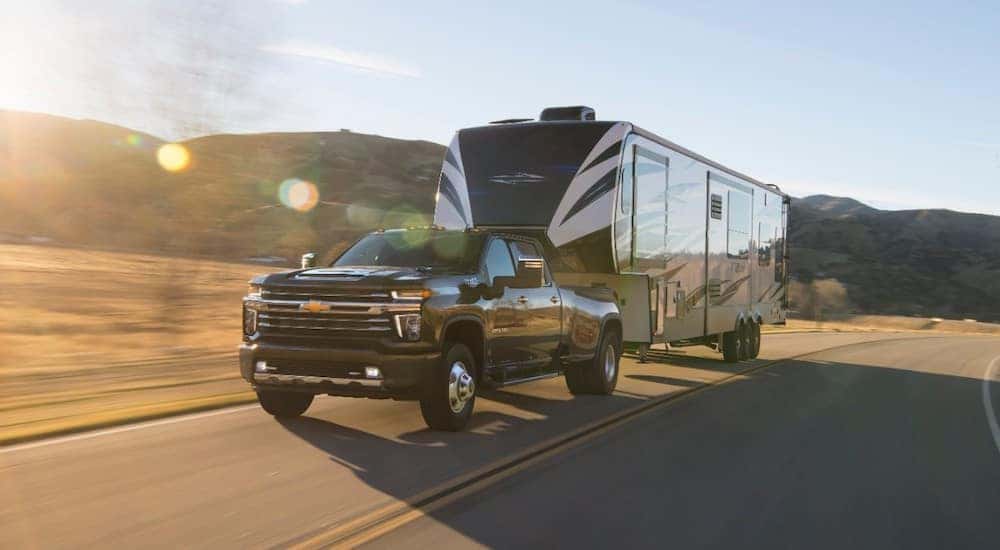
If you’ve been browsing our considerable selection of used trucks here at CBS Quality Cars, you might be wondering if you should invest in a pickup truck that can do some solid towing. We sure think you should. However, we understand that towing can sometimes seem overwhelming, perhaps even downright intimidating, so today, we want to walk you through what towing entails and how your life can change if you embrace your truck’s ability to trailer.
While you’ll undoubtedly enjoy the powerful feeling and truck bed that comes with a pickup, not using your towing ability means you’re missing out on the full pickup truck experience. We want you to get everything out of your truck because, with towing, your work and leisure life can receive a massive overhaul. When you can tow, you’ll be able to bring along a camper that can hold all the comforts of home, or you’ll be able to hitch a trailer that contains all the equipment you need for work. You won’t have to make as many trips since you can transport everything at once. Towing can make labor and relaxation easier.
What Can You Tow and What Are the Towing Limits?
First, you want to know what your truck can tow. This is not quite as straightforward as it sounds. Let’s say you have a 2022 Ford F-150 that can tow 14,000 lbs; this does not mean you necessarily want to tow right up to the 14,000-lb limit. Since you might misestimate the amount you’re towing, it’s always better to aim for a bit less than the maximum when you’re hitting the road. Generally, aiming to tow less than 90% to 80% of the maximum is a solid idea.
Different models have different towing capacities. As a rule, the Silverado 3500 usually offers the most towing for its respective year, with many versions of it allowing you to tow over 30,000 lbs. As a point of comparison, that’s the equivalent weight of five pickup trucks. Even the largest camper or the biggest personal boat won’t be much of an issue for a Silverado 3500.
That said, most drivers don’t need to tow 35,000 lbs. If you’re looking to spice up your leisure life by going on camping trips, visiting the dirt bike trails, or doing some jetskiing, pickup trucks that can tow 10,000 lbs will probably do you just fine. Similarly, if you do lawn work for customers, hauling around mowers will be simple enough with most used trucks. If you’re looking to move construction equipment, especially if you’re looking to reduce the number of trips you have to take, you may want to upgrade to a truck like the Silverado 2500 or the Ford F-250 or mid-tier GMC trucks, such as the Sierra 2500 HD. These trucks often let you move up to or close to 20,000 lbs. It is less than the Silverado 3500, but still more than enough to let you accomplish whatever the day’s mission is.
There’s an extra sense of security that comes with knowing you can tow a lot. If you suddenly have to move to a new house or need to help a friend who has to move or has a car that has stalled and needs to go to the mechanic, you can handle the situation without a problem. You’ll become the person that everyone knows they can count on.
Is It True That Diesel Is Better for Towing?
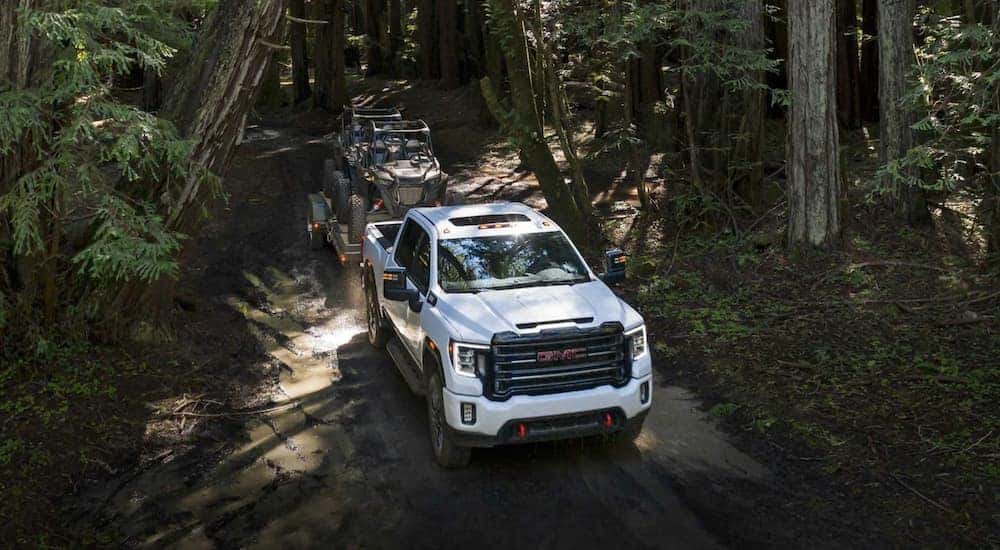
How does a Silverado 3500 move over 30,000 lbs? It can do that when a diesel engine is installed under the hood. If you’re opting for a pickup truck model and want to get the most out of it, you should keep an eye open for the trim or upgrade that arrives with a diesel engine over a gas one. Don’t worry that this means your weekly fill-ups at the pump will be too high. Diesel engines are not more expensive than gas ones in the long run; in fact, if you’re someone who drives a lot, you’ll probably save some cash over time. Diesel engines send your torque numbers to the moon, which gives you extra towing power. Torque is always directly proportional to how much you can move with your pickup truck; torque gives extra ability to accelerate, which is what you want when you have a lot of extra weight attached to your ride.
What Is This About a Fifth Wheel? And There’s Also a Hitch?
Sometimes, the terminology around trucking can make it sound far more complex than it actually is. The term “fifth wheel hitch” is a great example. The fifth wheel is not a literal wheel. It’s a type of hitch attached to a truck’s bed, allowing a driver to tow extremely heavy weights. Depending on what you’re towing, you may need a particular type of hitch; however, some trucks have one that aims to be usable for almost all circumstances. Depending on the make and model of your used truck, your fifth wheel hitch might have its own design or need.
With a fifth-wheel hitch, you attach your trailer to it, usually by backing up your pickup and connecting with what you’re trailering. Advanced trailering tech can make this much easier nowadays, but even without it, a few practice runs should make it relatively simple for you. You see, your trailer will have what’s called a “pin box” that will lock right onto your hitch. A check that it’s attached is always necessary before you depart; in fact, the more cautious you are at making sure the connection is secure, the better. No one wants to run into problems once they’re already on the road.
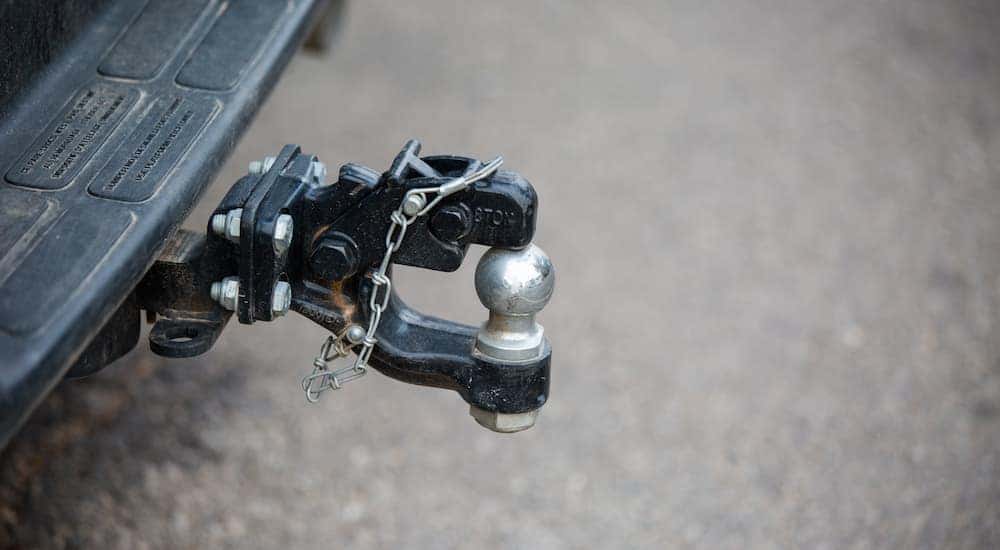
Different types of hitches, such as dual pivot heads or double jaw fifth wheel hitches, have different uses and will often result in different towing capacities. One form of towing might do better with a particular type of hitch than another. You don’t want to assume that because you can tow a certain weight, you can then tow whatever weighs beneath that limit. For instance, a four-way pivot head hitch works well if you have to tow something over rough terrain, while a double jaw wheel hitch results in quieter towing—perfect if you regularly tow through the suburbs in the evening. You wouldn’t want to opt for the latter over the former if you’re planning to traverse unpleasant terrain. You should always give close consideration to your hitch type.
Trailering Tech Can Give You a Hand
Almost all modern trucks come with technology that lets you tow with an extra level of confidence. For example, Chevy’s Advanced Trailering System alerts you to the weight in your trailer, how steady its positioning is, how well it’s hitched, and offers you multiple camera views so that you know precisely where your trailer is as you navigate both on and off-road. This makes towing far simpler for new towers, and even old hands at trailering end up happy with the extra set of eyes such systems give them.
You might be concerned that buying a used pickup means you’ll miss out on this tech. This is not the case. Trailering tech has been in pickup trucks for a long while now, so even if you buy a five-year-old pickup, you’ll have guidance systems that will make your labor simpler and safer than before. Buying used can be a smart move—you get a discount and still have access to many of the benefits of pickup truck innovation that has revolutionized this type of vehicle.
More Questions? We’re Happy to Answer Them
If you still have questions or concerns about towing, visit us here at CBS Quality Cars. We’ll be happy to give you a hand and address any lingering concerns you have about towing. We love pickup trucks, and we’ve been selling them for a long time; there’s no way you’ll stump us. We want to get you towing so that you can expand what your automotive life will give you, and we’re more than happy to help you pick the exact type of truck and hitch that will make that possible.
0 comment(s) so far on How to Get the Most Out of Your Truck’s Towing Ability